The world’s largest wealth fund may become a large green energy investor
Norway's new – not yet appointed – Prime Minister, Erna Solberg of the Conservative Party, may at first instance appear less occupied by global issues like climate change than her predecessor Jens Stoltenberg of the Labour party. But on a few critical climate issues she looks like more of a reformer than Mr Stoltenberg, in particular when it comes to what role Norway’s enormous Sovereign Wealth Fund could play in financing the transition to a low-carbon economy.
In the New Government's programme revealed this week, the coalition partners made the following statements regarding the $720bn sovereign wealth fund:
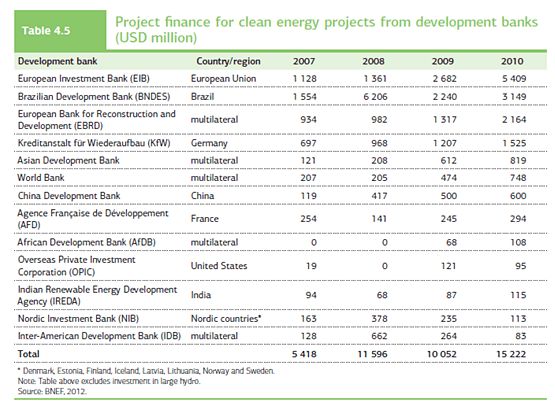
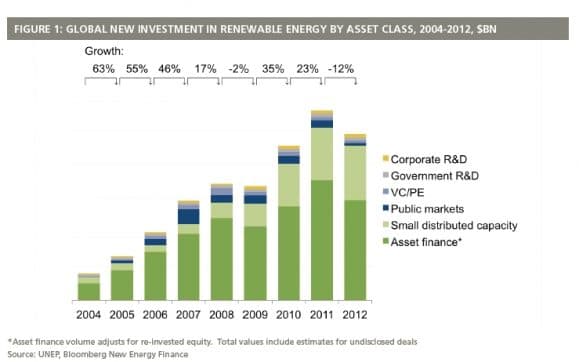
Norway's Sovereign Wealth Fund, officially called the Government Pension Fund Global (GPFG), is the world's largest sovereign wealth fund. Currently the fund is allowed to invest in listed equities, bonds and real estate. However, if the fund were allowed to expand its portfolio to include direct investments in assets like wind and solar plants and other infrastructure, this could potentially have a very significant impact on the total flow of capital to the renewable energy sector.
A number of organizations and institutions in Norway have for some time been advocating such a reform. Even the Fund's manager, Norway's Central Bank, has asked the Ministry of Finance to let it enter into direct infrastructure investments, so far without approval. However, last week an influential and unusual alliance of leading companies and organisations in finance, religion, renewable energy, environment and development, put the question on the top of the Norwegian agenda through a joint initiative. The Norwegian Government Pension Fund Global should start to invest directly in infrastructure for the production and distribution of renewable energy, was their message. Direct investments in renewable energy would be a good move on the basis of both a financial and sustainability perspective, they argue.
The group of signatories includes financial institutions such as KLP, Storebrand Asset Management, the Ulltveit-Moe Group, the green energy company Scatec (my employer), the Catholic Diocese of Oslo and a number of organizations in the field of environment and development: WWF Norway (World Wildlife Fund), The Norwegian Climate Foundation, The Development Fund, Future in our hands, Zero, Greenpeace, Friends of the Earth Norway and Young Friends of the Earth Norway.
In the letter, the signatories underline that other large European pension funds are already investing directly in renewable energy, and that the GPFG is very well positioned to do the same. The size of the fund, the long-term investment horizon and the fact that the fund does not have on-going liquidity needs, makes it possible for the GPFG to aim at investing directly in renewable energy projects, they say. Another argument to do so is that global warming threatens the long-term performance of the Pension Fund. With more extreme weather the international community must spend an ever increasing amount of resources on repair and adaptation, at the expense of investments that can yield higher productivity and hence good returns on financial investments.